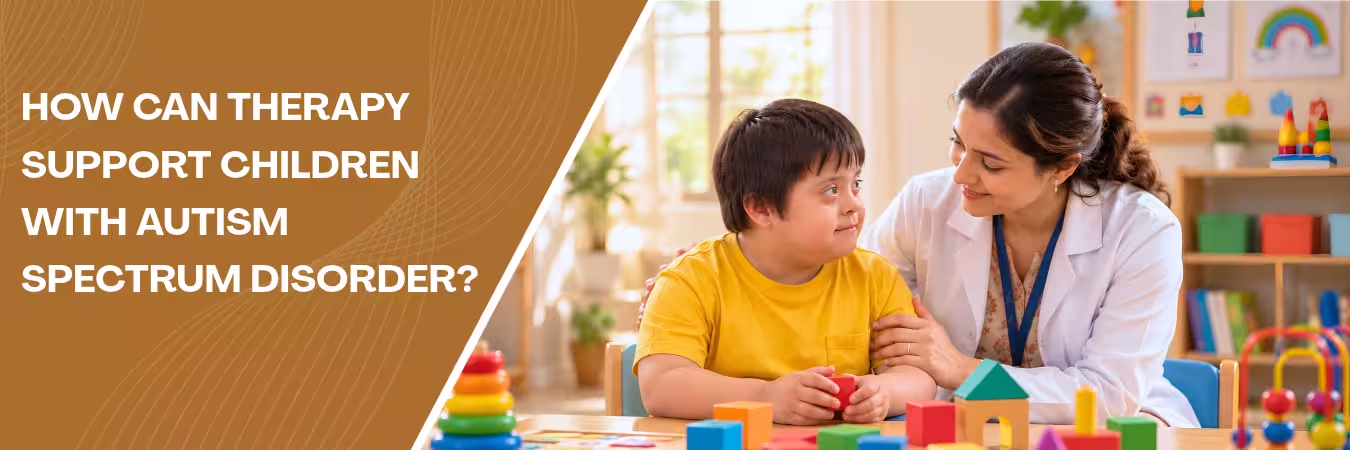
HOW CAN THERAPY SUPPORT CHILDREN WITH AUTISM SPECTRUM DISORDER?
Autism Spectrum Disorder (ASD) is a developmental condition that can influence communication, social interaction, behaviour, sensory processing, and everyday skills. Every child with autism is different, and the areas of difficulty and strengths can vary from one child to another. Some children may experience challenges with speech, social communication, attention, sensory responses, or daily routines. With appropriate assessment and individualized support, therapy can help children develop functional skills, participate in daily activities, and build greater confidence.
WHAT ARE THE COMMON SIGNS OF AUTISM SPECTRUM DISORDER?
The signs of Autism Spectrum Disorder can appear at different stages of childhood and may vary significantly between children. Some children may have delayed speech, difficulty responding to their name, limited eye contact, challenges with social interaction, or difficulty expressing their needs. Others may show repetitive behaviours, strong preferences for routines, unusual responses to sounds or textures, or difficulty adapting to changes. If parents notice concerns about communication, behaviour, play, or development, a professional evaluation can help understand the child’s individual needs.
WHO MAY BENEFIT FROM THERAPY FOR AUTISM?
Children with Autism Spectrum Disorder may benefit from therapy when challenges with communication, sensory processing, movement, social participation, or everyday activities affect their development. Speech Therapy can support communication, language development, social communication, and other related needs. Occupational Therapy may help children develop daily living skills, fine motor abilities, sensory regulation, and participation in activities. At Eraya Rehabilitation Healthcare Centre, therapy is planned according to each child’s developmental level, strengths, challenges, and individual goals.
HOW CAN THERAPY HELP CHILDREN WITH AUTISM?
Therapy can provide children with structured opportunities to develop skills that are important for communication, learning, interaction, and independence. Speech Therapy may support understanding and using language, expressing needs, and developing functional communication. Occupational Therapy can work on sensory processing, hand skills, self-care, play, and participation in everyday activities. Depending on the child’s needs, a multidisciplinary approach at Eraya Rehabilitation Healthcare Centre can bring together different areas of rehabilitation for more personalized support.
WHY IS EARLY INTERVENTION IMPORTANT FOR CHILDREN WITH AUTISM?
Early identification and appropriate intervention can help families understand a child’s developmental needs and begin suitable support at the right stage. Regular therapy can provide opportunities to strengthen communication, social interaction, self-care, learning, and other functional skills. It can also help parents learn practical ways to encourage development and communication during everyday routines at home. Early support does not mean that every child will follow the same path; instead, it allows therapy to be adapted to the child’s abilities, needs, and progress.
AUTISM REHABILITATION SUPPORT AT ERAYA REHABILITATION HEALTHCARE CENTRE
At Eraya Rehabilitation Healthcare Centre, we provide personalized rehabilitation support for children with different developmental and functional needs. Our multidisciplinary approach may include Speech Therapy, Occupational Therapy, Physiotherapy, and other supportive services depending on the child’s assessment and requirements. We focus on practical goals such as improving communication, participation, sensory regulation, motor skills, and independence in everyday life. If you have concerns about your child’s development or autism-related challenges, connect with Eraya Rehabilitation Healthcare Centre for professional assessment and individualized therapy support.
Ready to start your recovery?
Talk to our physiotherapy team about a personalized rehabilitation plan built around your recovery stage.