WHAT IS PURE TONE AUDIOMETRY AND HOW DOES IT WORK?
Pure Tone Audiometry (PTA) is a hearing test that checks how well a person can hear sounds at different pitches and volumes. It helps identify whether someone has difficulty hearing soft sounds or sounds within particular frequency ranges. In Audiology, this test is commonly used to assess hearing ability in children and adults who can participate in the assessment. The results help professionals understand whether hearing loss may be present and whether further evaluation is needed. At Eraya Rehabilitation Healthcare Centre, hearing assessments help individuals and families understand their hearing needs and explore suitable next steps.
WHY IS PURE TONE AUDIOMETRY PERFORMED?
Pure Tone Audiometry may be recommended when a person has difficulty following conversations, frequently asks others to repeat themselves, or notices changes in hearing. It can also be useful when hearing concerns may be affecting communication, learning, or daily activities. The test helps identify which sound frequencies a person can hear clearly and which may require further attention. An audiologist uses the findings to determine whether additional evaluation or hearing support may be appropriate.
HOW DOES A PURE TONE AUDIOMETRY TEST WORK?
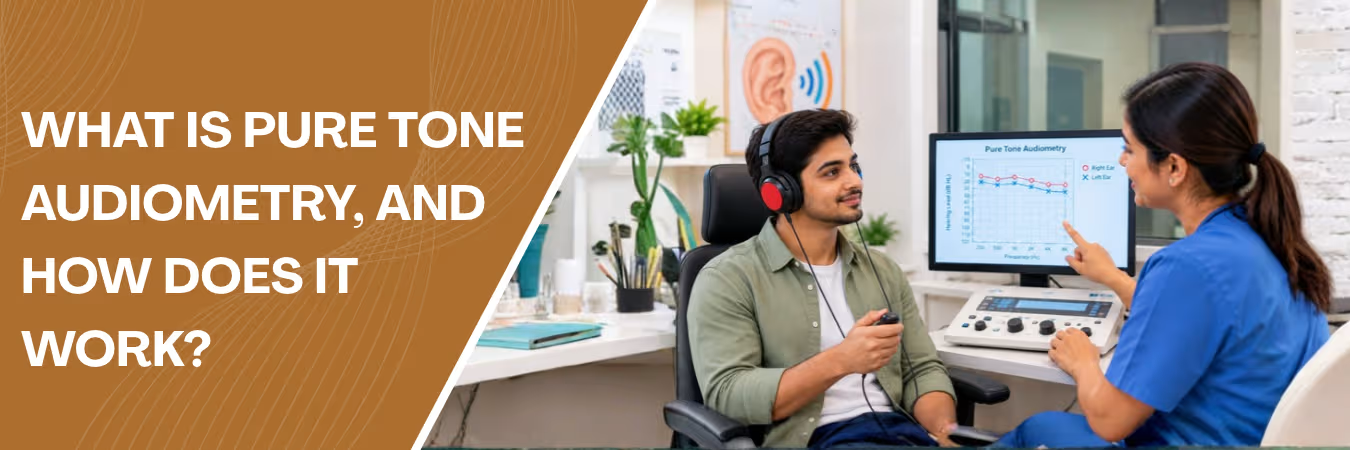
During the assessment, the person wears headphones and listens to sounds played at different pitches and volumes. They are asked to respond whenever they hear a sound, often by pressing a button or raising a hand. The sounds are presented one at a time, and their volume is adjusted to find the quietest level the person can hear at different frequencies. These responses are recorded on a hearing chart called an audiogram, which helps the audiologist interpret the results.
WHO MAY NEED A PURE TONE HEARING TEST?
Children and adults may be advised to undergo Pure Tone Audiometry when there are concerns about their hearing. It may be useful for people who find conversations difficult to follow, have noticed changes in hearing, or need an assessment as part of their hearing care. The test may also be recommended when hearing difficulties could be affecting a child’s communication or classroom learning. The audiologist will decide whether this assessment is appropriate based on the person’s age, communication abilities, symptoms, and clinical history.
WHAT DO PURE TONE AUDIOMETRY RESULTS SHOW?
The results are displayed on an audiogram, which shows the softest sounds a person can hear across different frequencies. This information helps the audiologist understand whether hearing falls within the expected range or whether hearing loss may be present in one or both ears. The pattern of results can also help identify which pitches are more difficult to hear. The findings are explained to the patient or family, along with recommendations for further testing, hearing care, or follow-up when appropriate.
PURE TONE AUDIOMETRY AND AUDIOLOGY SERVICES AT ERAYA REHABILITATION HEALTHCARE CENTRE
At Eraya Rehabilitation Healthcare Centre, our Audiology services support individuals and families who need guidance about hearing health. A suitable hearing assessment can help clarify hearing concerns and guide decisions about further evaluation or support. Based on the assessment findings, the next steps may include additional hearing tests, monitoring, or recommendations from a qualified professional. If you or your child is experiencing difficulty hearing, contact Eraya Rehabilitation Healthcare Centre to discuss your hearing assessment needs and receive personalized guidance.
Ready to start your recovery?
Talk to our physiotherapy team about a personalized rehabilitation plan built around your recovery stage.